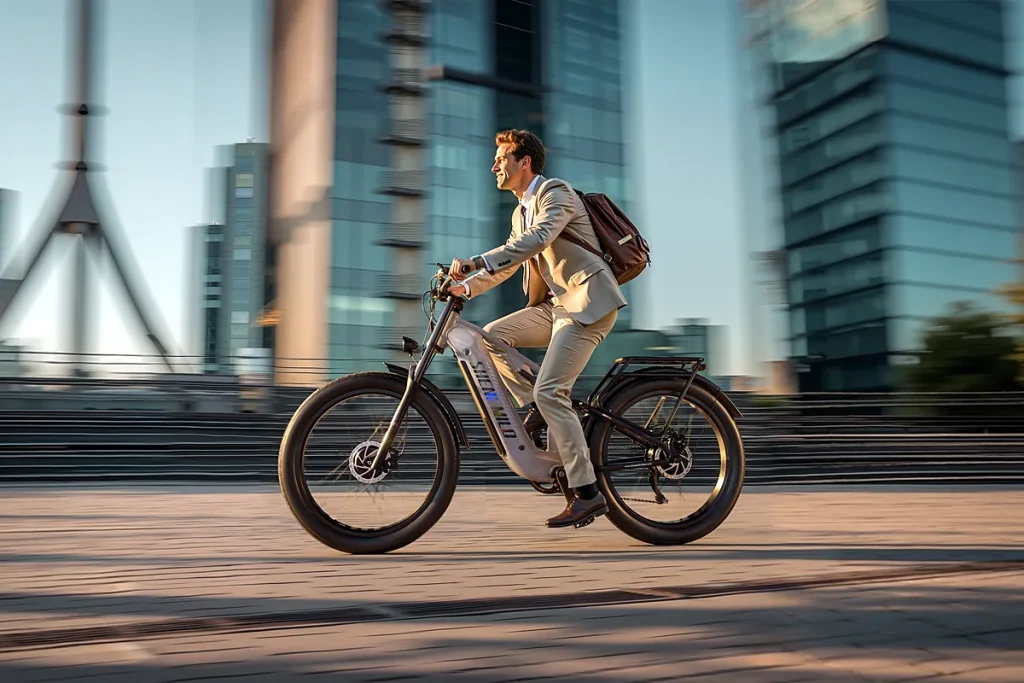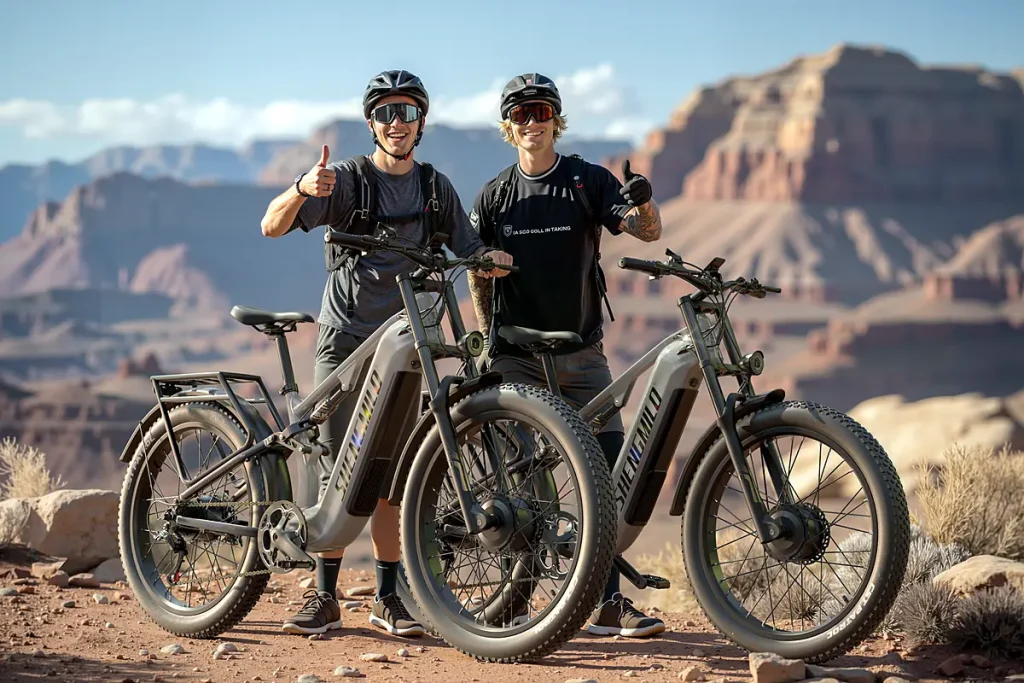
In short: in the fat bike vs mountain bike question, the answer depends on the ground you ride. A fat bike, with tires of 3 inches or wider, wins on snow, sand, mud, grass and loose gravel, and it feels calm and stable. A mountain bike, with tires of about 2.2–2.6 inches, is lighter and more nimble on fast, technical singletrack. For mixed terrain, farm tracks and year-round riding, an electric fat bike is often the more practical choice.
Both bikes look tough, both have flat handlebars and both love dirt. So why do riders argue about them so much? Simply because the difference shows up the moment the ground gets soft. Let’s compare them honestly.
Fat bike vs mountain bike: the key difference
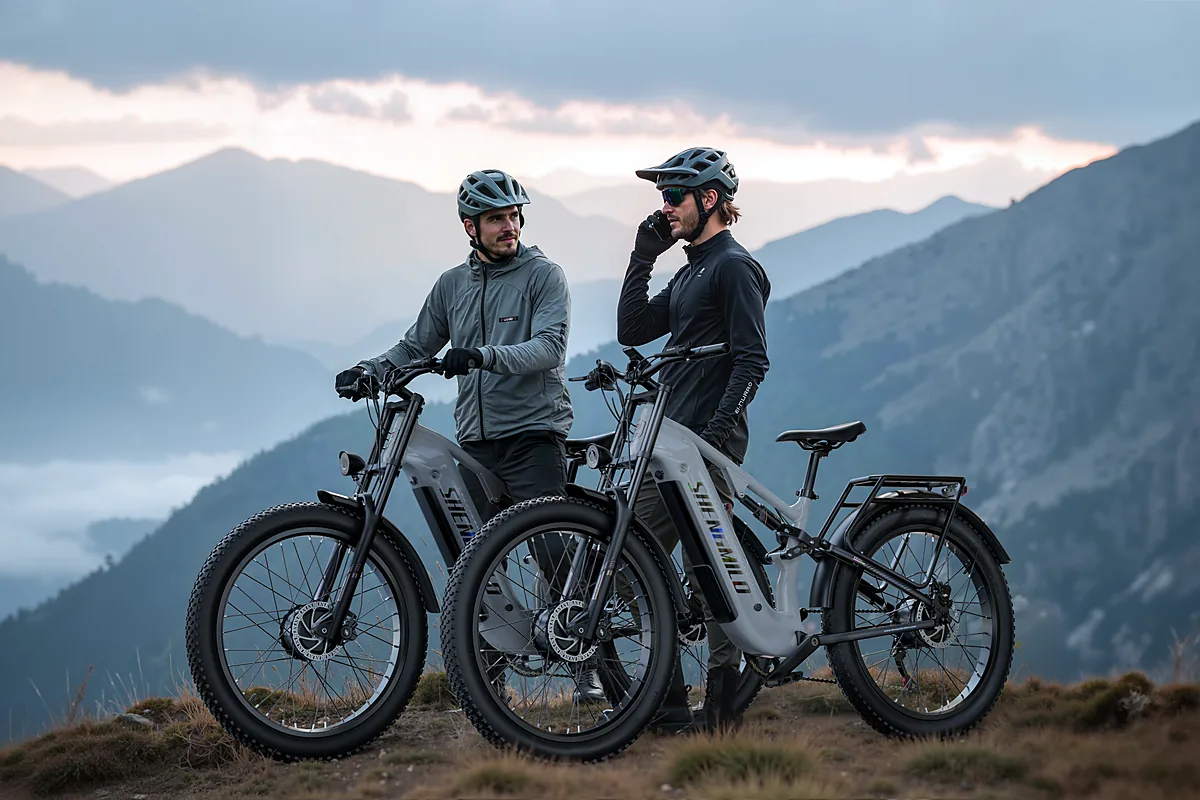
Above all, the tires make the bike. A typical mountain bike tire is 2.2–2.6 inches wide. A fat bike tire, on the other hand, starts at about 3 inches and goes up to 4.8. In fact, that extra width changes everything about how the bike rides.
| Fat bike | Mountain bike | |
|---|---|---|
| Tire width | 3.0–4.8″ | 2.2–2.6″ |
| Tire pressure | Low (more grip and comfort) | Medium |
| Best ground | Snow, sand, mud, grass, gravel | Hard-packed trails, roots, rocks |
| Feel | Stable, calm, forgiving | Light, quick, agile |
| Weight | Heavier | Lighter |
| Year-round use | Excellent | Good in dry months |
Fat bike vs mountain bike on soft ground: where the fat bike wins
Soft ground
A wide tire spreads your weight over a bigger area. As a result, it floats over sand, snow and wet grass instead of digging in. A mountain bike tire, in contrast, sinks and slides.
Comfort
Fat tires run at low pressure, so they work like extra suspension. Therefore, every bump gets softer. Consequently, long rides on rough farm tracks and forest paths feel much easier on the body.
Stability and confidence
The big contact patch makes a fat bike feel planted. That is why beginners, heavier riders and older riders often feel safer on one. In other words, you worry less about losing grip.
All seasons
Fat bikes were first built in Alaska for riding on snow. Even today, they are the best choice if you want to ride in every season. Our guide to riding an e-bike in winter shows why.
Fat bike vs mountain bike on trails: where the mountain bike wins
Light and nimble
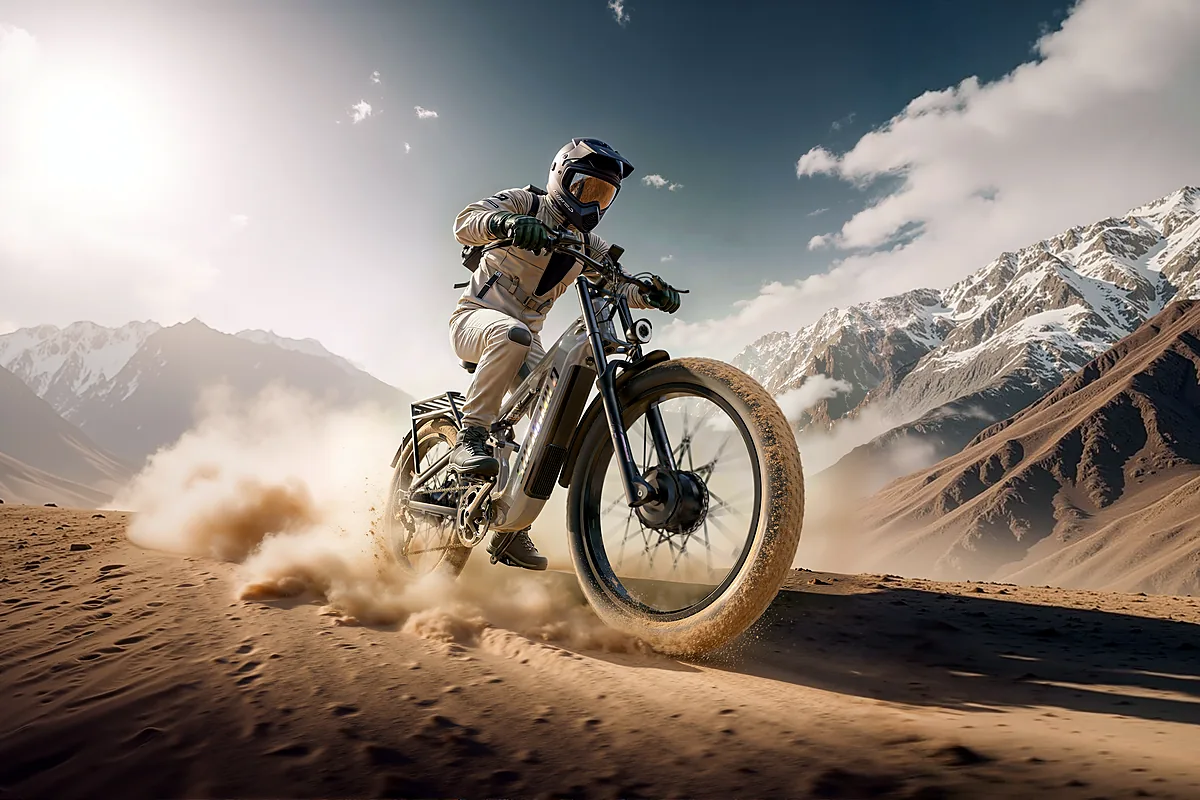
First of all, a mountain bike weighs less and steers more quickly. On tight, twisty singletrack, that agility is a big advantage. Besides, it is easier to lift over obstacles or onto a car rack.
Fast, technical trails
Similarly, on hard-packed trails with jumps, drops and fast corners, a modern mountain bike is hard to beat. After all, its geometry and suspension suit exactly that kind of riding.
Rolling on hard ground
Finally, on tarmac and hard gravel, narrower tires roll a little more easily. Without a motor, you feel this difference in your legs. Still, it is small compared with the fat bike vs mountain bike gap on soft ground.
What changes with an electric fat bike?
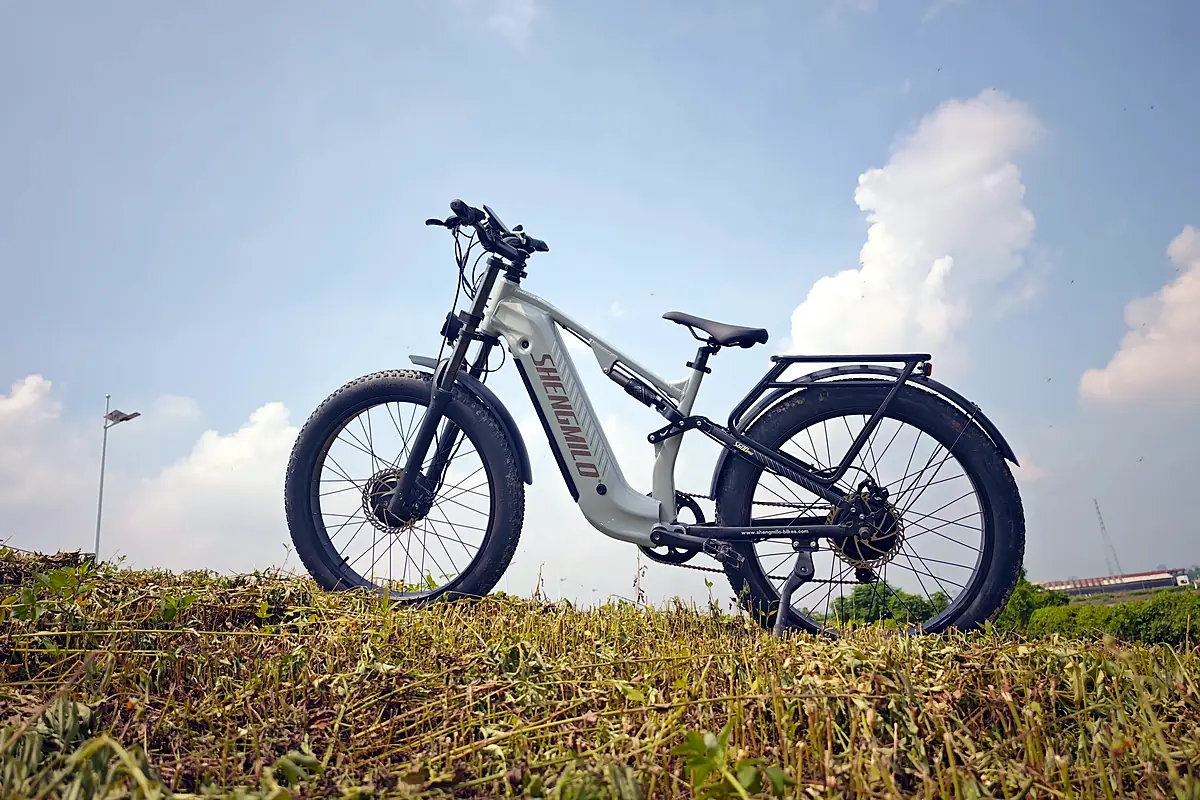
The classic downside of a fat bike is the effort: heavy wheels, wide tires and more rolling resistance. A motor removes that downside almost completely. Suddenly, the extra weight no longer matters on climbs, while the grip, comfort and stability remain.
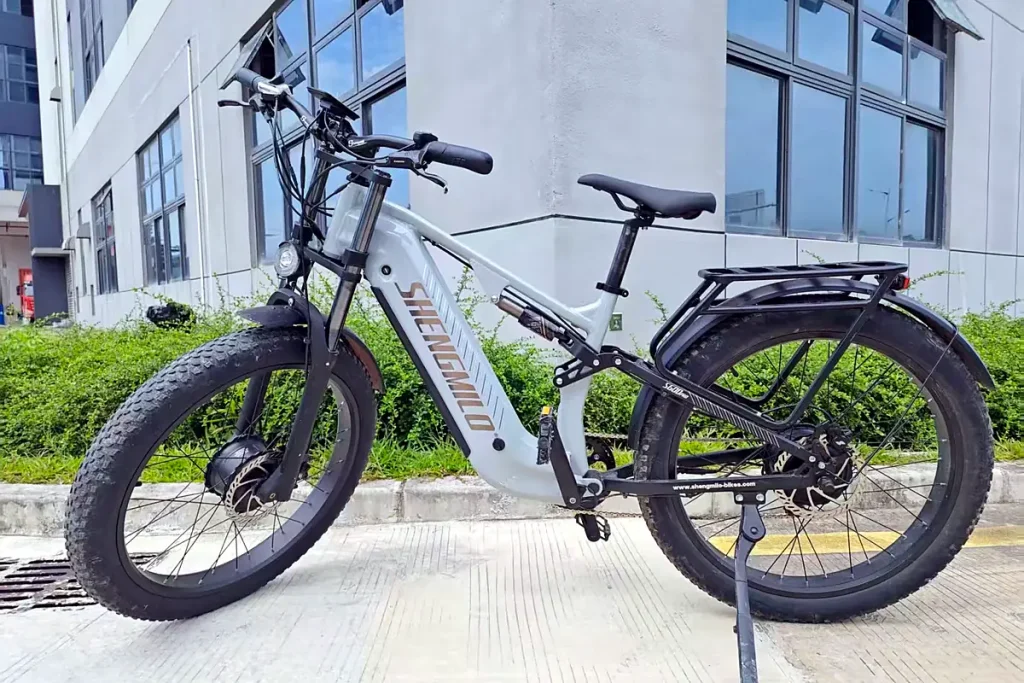
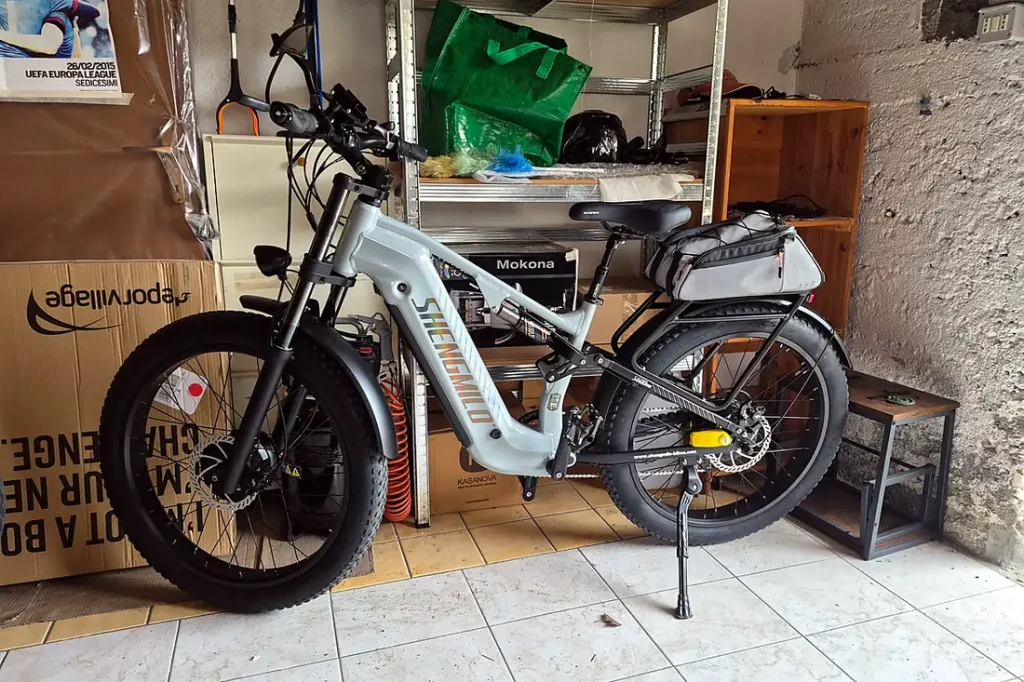
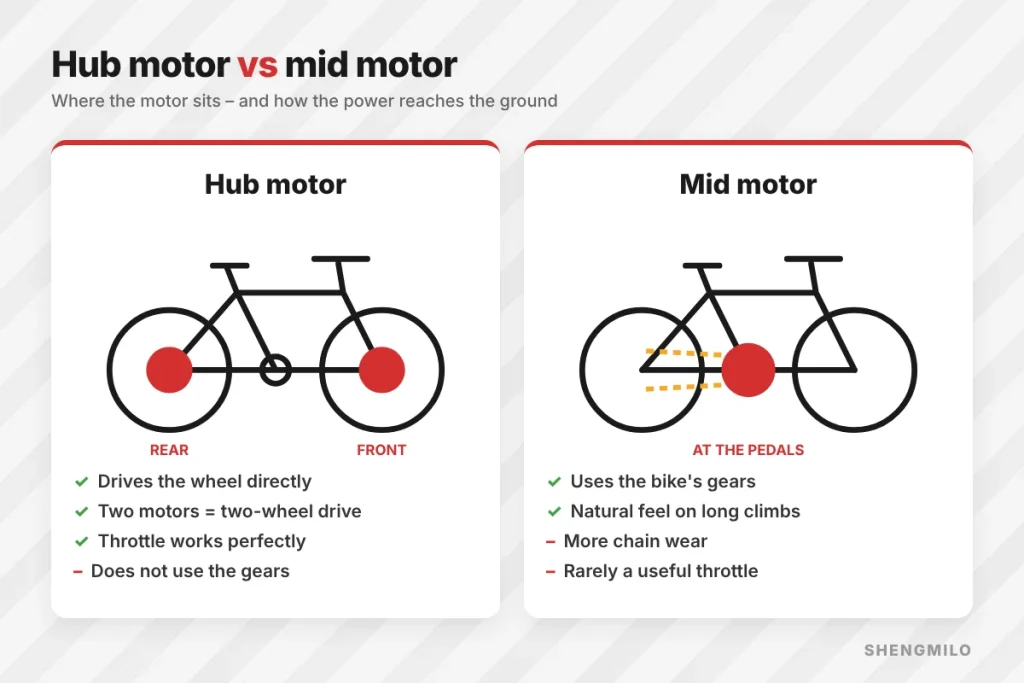
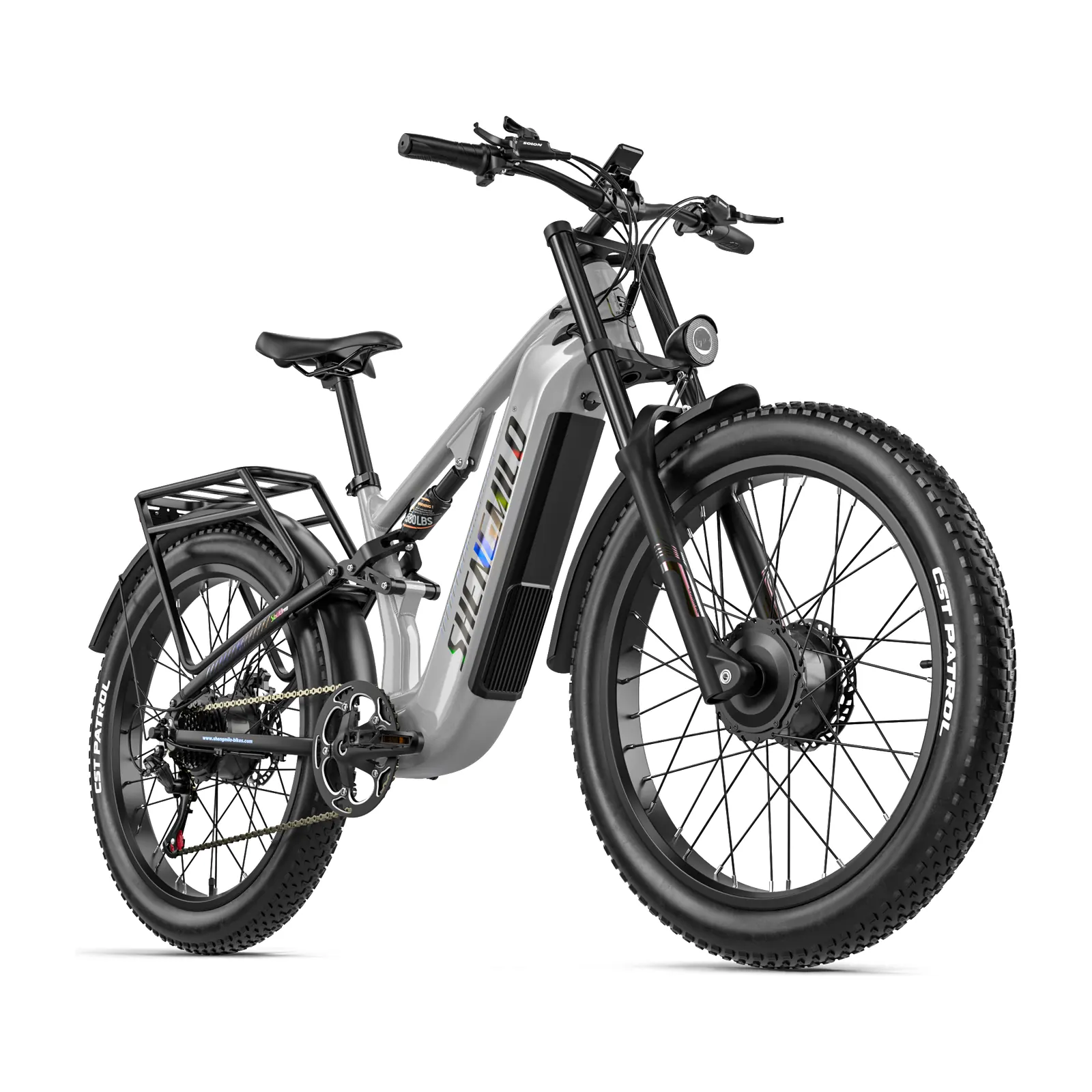
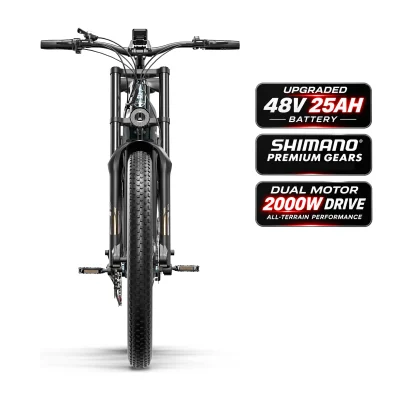
Take the Shengmilo S600 PRO. Its 26 × 3.0″ tires grip on soft ground, while two 1000 W motors – one in each wheel – pull it up slopes of up to 40°. In addition, full suspension adds comfort on top of the fat tires. Read why a dual motor e-bike makes the difference to learn more.

Fat bike vs mountain bike: which one should you choose?
Choose a fat bike if you:
- ride on farm tracks, grass, sand, mud or snow;
- want comfort and stability more than speed;
- ride in every season;
- carry luggage or tools on a rear rack;
- are new to off-road riding or simply want more confidence.
Choose a mountain bike if you:
- ride fast, technical singletrack most of the time;
- care a lot about low weight;
- ride mainly in dry conditions.
However, for most people who ride on their own land, country paths or mixed terrain, the answer is clear. An electric fat bike simply does more things well, so it wins the fat bike vs mountain bike contest for everyday use. Our guide to fat tire bike advantages goes into more detail, and the electric bike for farm and land guide shows how it works in daily life.
Which Shengmilo fits you?
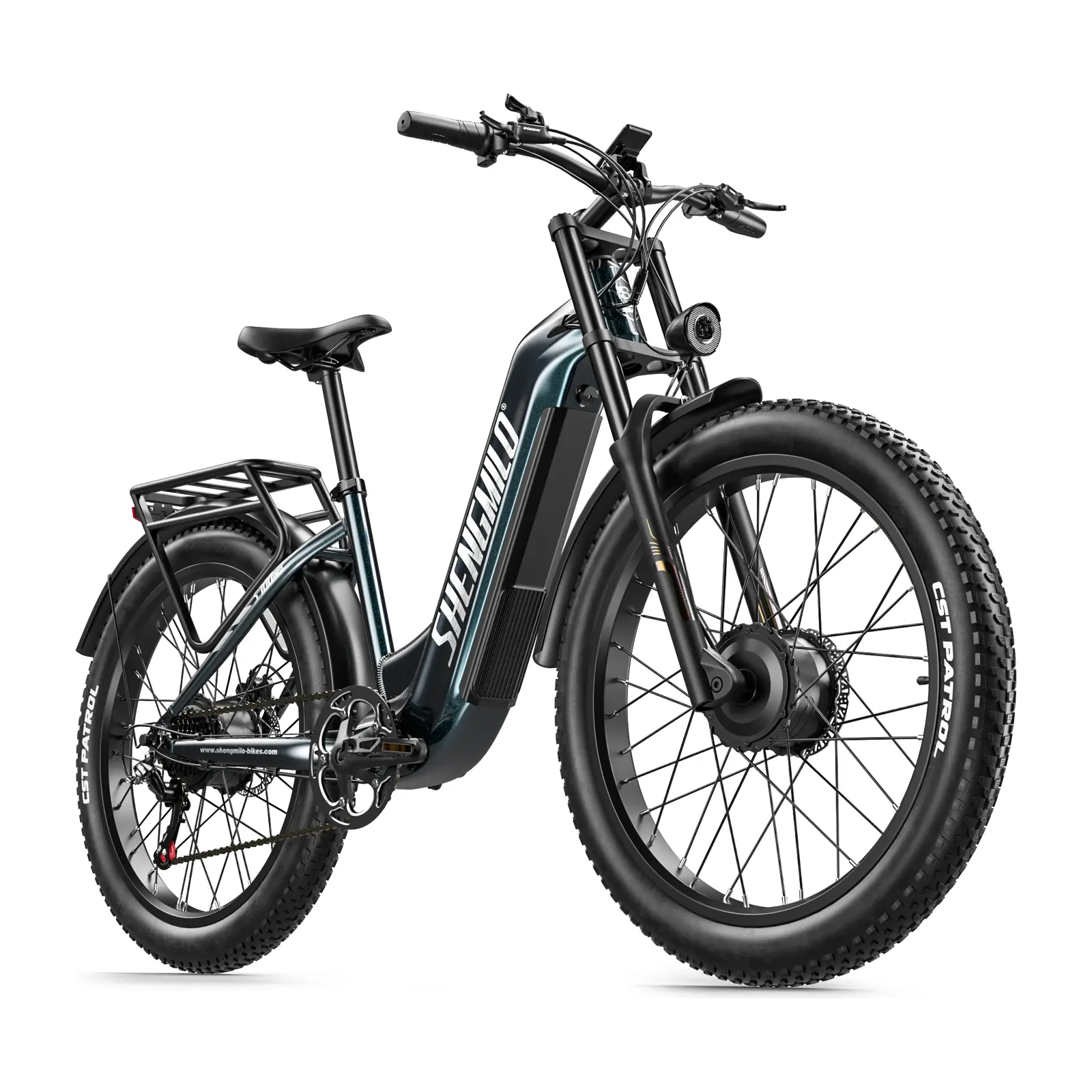
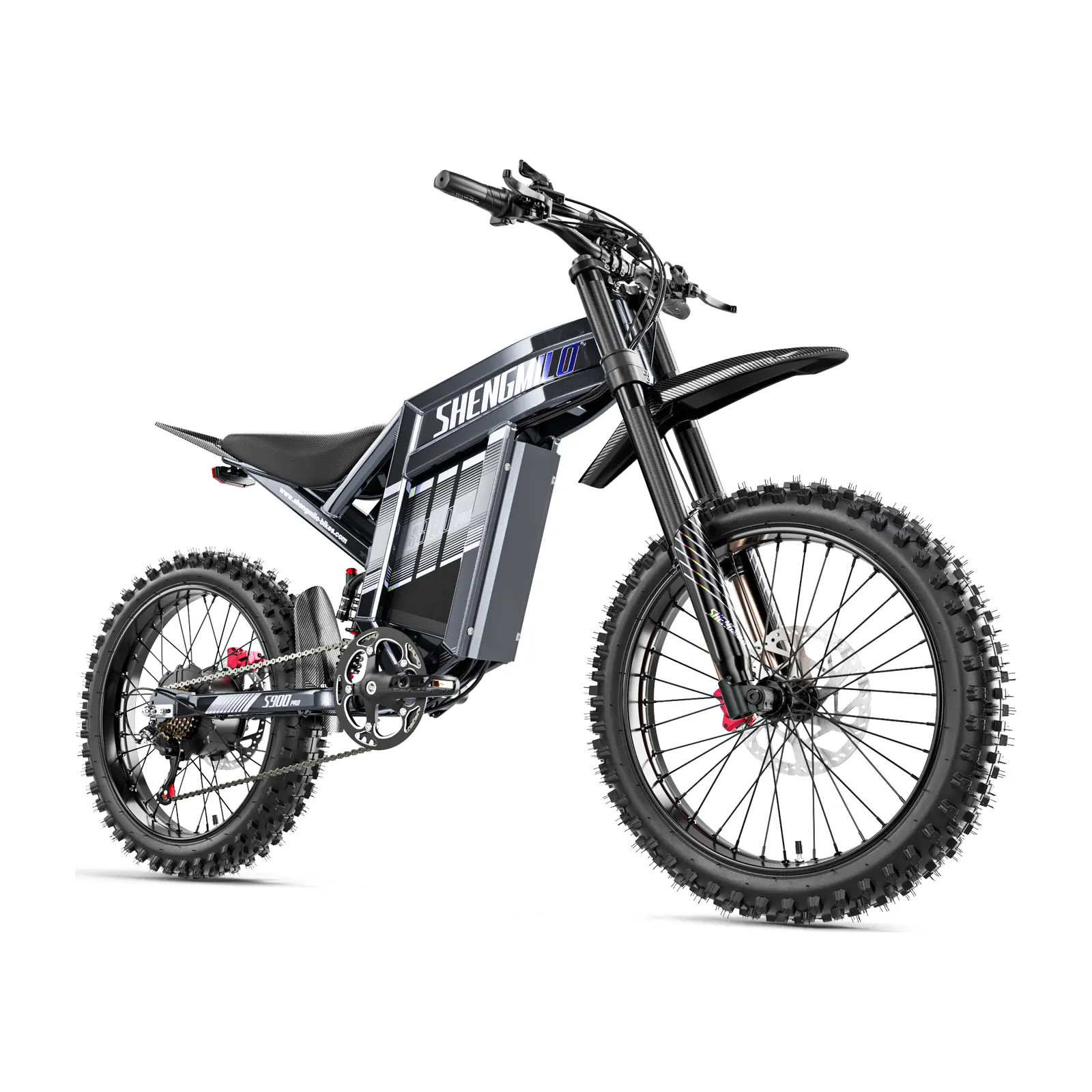
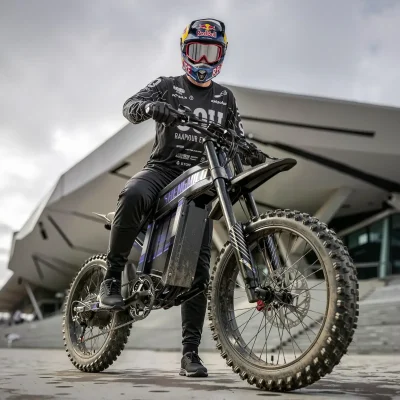
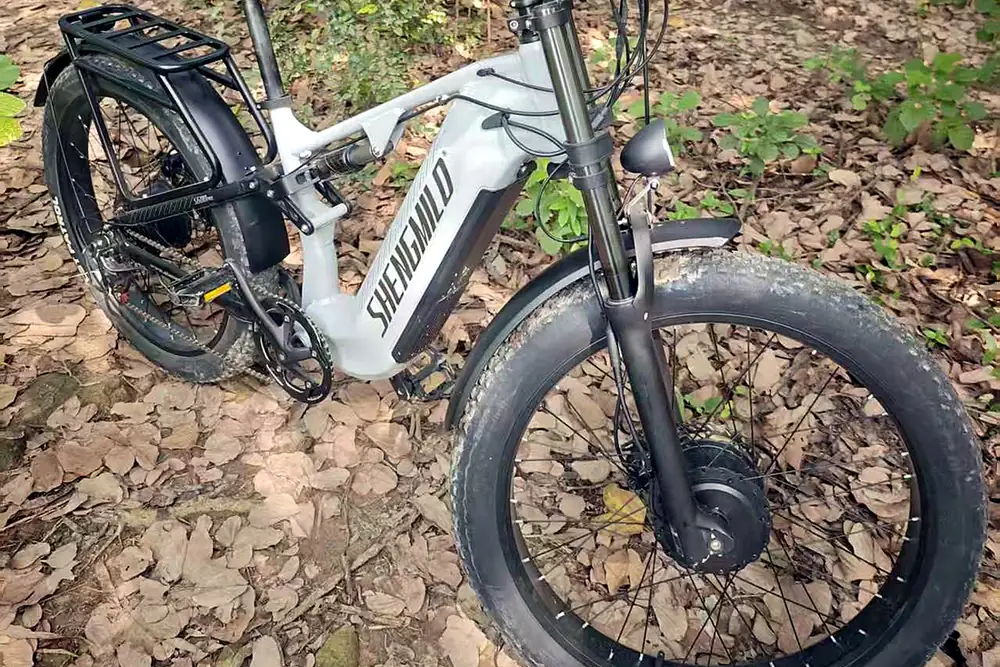
As you might expect, all Shengmilo all-rounders are electric fat bikes. The S600 PRO suits most riders with full suspension and two motors. The step-through S700 PRO is easier to get on, and the S900 PRO is built for the roughest ground. Compare them in S600 PRO vs S900 PRO.
Please note, however, that these models are much more powerful than a standard EU pedelec (250 W, 25 km/h). As described in EU Regulation 168/2013, they are made for private land, not for public roads or cycle paths.
Fat bike vs mountain bike: the verdict
To sum up, the fat bike vs mountain bike choice comes down to your ground. On the one hand, mountain bikes rule fast, dry singletrack. Fat bikes, however, rule everything soft, wet, loose or snowy – and with a motor, they lose their only real weakness. Questions? Ask our team which bike suits your land.